Why Fire Ant Identification Matters
Fire ants are small but formidable insects that pose an invasive threat to Australia. Native to South America, these aggressive ants were first detected in 2001 at a major Australian port and have since prompted surveillance across eastern Australia. Correctly identifying fire ants keeps families, pets, and local ecosystems safe. If you need a licensed inspection while you wait for biosecurity to arrive, book our ant control service for a same-day site visit in Sydney.
Unlike native Australian counterparts, fire ants are extraordinarily aggressive and deliver venomous stings that feel like burning. Knowing the warning signs helps you report them quickly and support the country’s eradication efforts. Compare providers in our guide to choosing an ant control service to confirm you’re working with a licensed technician.
Watch how to spot fire ant activity and why reporting suspected nests quickly protects the community.
Physical Characteristics and Recognition
Fire ants are tiny—only 2-6 mm longwhich makes them easy to overlook. Their copper or reddish-brown head and darker brown-to-black abdomen create a two-tone appearance that stands out when viewed closely.
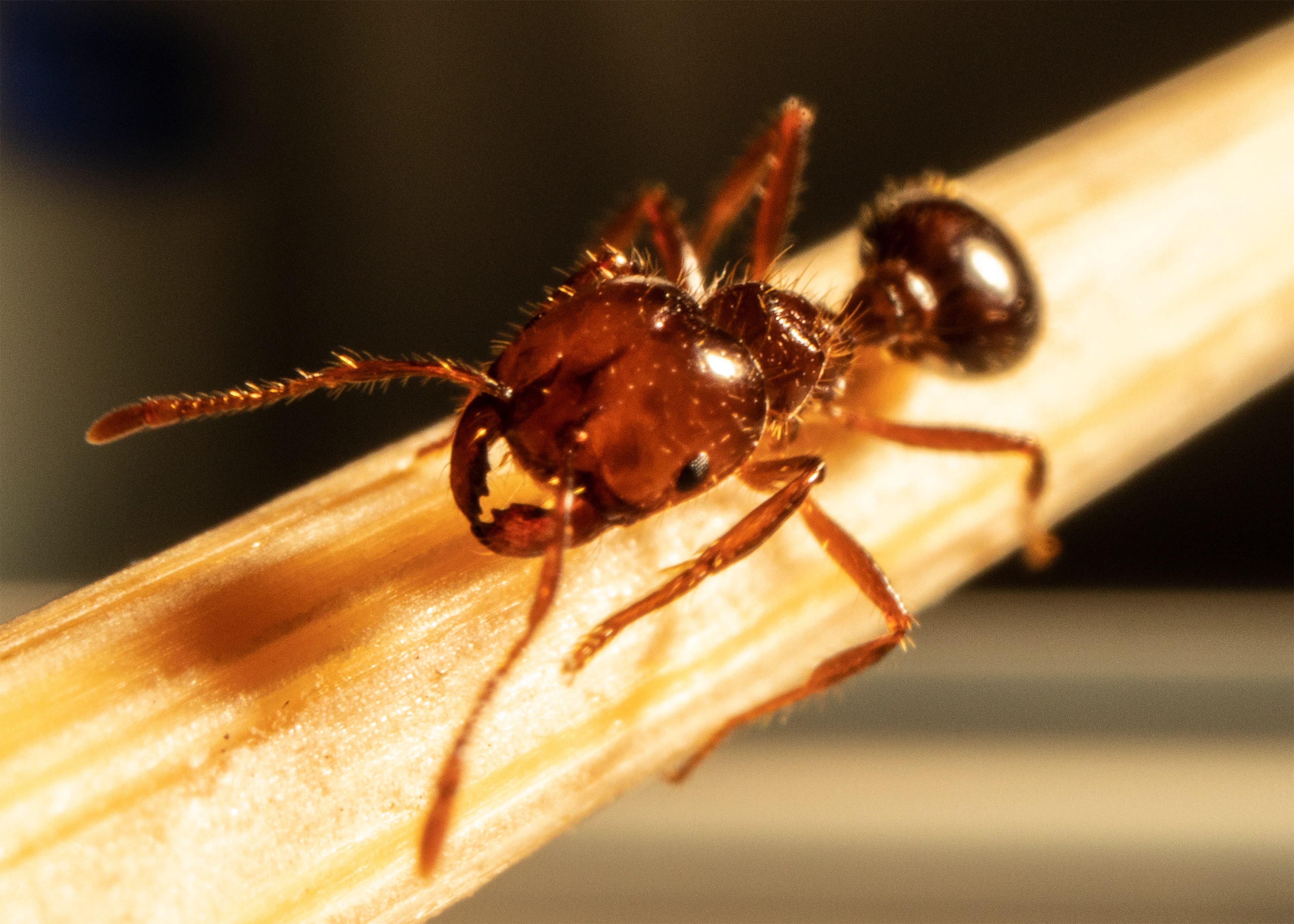
Picture Credit : National Fire Ant Eradication Program
Close-up of invasive fire ants: note the copper head and darker abdomen.A single nest contains a mix of small, medium, and large workers rather than a uniform size. This size variation is a key clue that you are seeing fire ants rather than common Australian backyard species.
Small but Varied
Workers range from 2-6 mm within the same nest, unlike many uniform native ants.
Copper Colour
Look for a reddish head and thorax paired with a darker brown or black abdomen.
Nest Clues
Mounds may appear flat or dome-shaped and often lack a clear central opening.
Painful Stings
Stings deliver a burning sensation—hence the name “fire” ant.
Behavioural Identification
Fire ants respond explosively when their nest is disturbed. Tens to hundreds of workers rush out at once, charge up vertical surfaces, and sting repeatedly. A single sting often prompts nearby ants to join the attack, leading to multiple painful stings in seconds.
This aggressive swarming differs sharply from native Australian ants, which typically defend passively or scatter. If you see rapid, coordinated attacks, you may be looking at fire ants. Keep a log of where you notice activity—our Sydney pest control guide shows when ant pressure typically spikes across the city.
Environmental and Health Impact in Australia
Australia’s warm climate, including the Sydney basin, is ideal for fire ant proliferation. More than 95% of the country is considered suitable for infestation, and current estimates place their footprint at roughly 850,000 hectares.
The ecological risk is severe. One study on 123 animal species in eastern Australia predicted declines in approximately 45% of birds, 38% of mammals, 69% of reptiles, and 95% of frogs if fire ants spread unchecked.
Recent detections in regional NSW show the infestation is moving south and into new ecological zones, including the Murray Darling Basin.
What to Do If You Suspect Fire Ants
-
Observe from a Distance
Use a long stick to gently disturb the nest and watch how the ants respond without getting close to stinging workers.
-
Report Immediately
Contact the National Fire Ant Eradication Program or your state biosecurity authority. Provide photos, the address, and what you observed.
-
Skip DIY Treatments
Do not attempt eradication on your own. Unapproved sprays can scatter the colony and put people, pets, and native wildlife at risk.
Staying Safe Near a Suspected Nest
Keep everyone safe while authorities investigate your report:
More Pest Control Resources
Explore these guides and service pages to stay ahead of Sydney pests and compare pricing across NSW:
Ant Control Service
See our licensed treatments, warranty details, and pet-safe approach.
Australia Price List 2025
Compare average costs for ants, spiders, rodents, and termites.
Pest Control Sydney Costs
What to expect for call-out fees and bundled services in metro Sydney.
Central Coast Guide
Local hotspots, seasonal pressures, and treatment options.
Liverpool NSW Guide
Neighbourhood-specific tips and when to book follow-up visits.
Sydney Guide 2025
Seasonal pest patterns, regulations, and prevention checklists.
Best Season for Pest Control
Book ahead of peak ant and spider activity to lock in pricing.
Termite Control Service
Barrier options, warranties, and inspections for Sydney homes.