
Common signs
Bites in rows or clusters, dark spotting along mattress seams, shed skins, or live insects in bed frames and bases.

Bed bugs are hard to find and harder to kill, and most of what goes wrong happens before anyone applies a treatment. This page explains what a competent Sydney bed bug job actually looks like, so you can judge us, or anyone else, against a published standard rather than a promise.
The AEPMA and NSW Health Pathology Industry Code of Best Practice for Bed Bug Management describes what a competent job should involve. Use it to ask us about inspection, preparation, treatment and follow-up.
Understand the early signs, how to prepare the room and what follow-up usually involves.
Helpful when you enquireNote where you are being bitten and where insects were first seen. A close photo of a live insect or a mattress seam helps confirm identification.
Before, during and after the visit
Bites in rows or clusters, dark spotting along mattress seams, shed skins, or live insects in bed frames and bases.
Shifting mattresses or bagging clothes into another room can spread an infestation. Keep affected items where they are.
Launder and hot-dry bedding, reduce clutter around beds, and provide access to both sides of every bed and adjacent furniture.
Beds, frames, bedheads and nearby furniture are inspected before a suitable treatment and follow-up schedule are explained.
A second visit is commonly required. Use mattress encasements, keep checking seams and report any new bites promptly.
The treatment approach, number of visits and preparation required are confirmed after the property and extent of activity are assessed.
Bed bug control in Sydney means a full inspection, a written eradication plan, physical removal and heat combined with residual insecticide, and at least one follow-up visit to confirm the infestation is gone. A single treatment almost never eradicates bed bugs, because they hide in cracks that inspections miss and because Australian field populations resist most registered insecticides. Expect a process of weeks, not a single appointment, and expect to do preparation work yourself.
Look for the evidence, not the bites. Bites are unreliable: people react differently, some people do not react at all, and a reaction can appear up to nine to fourteen days after the bite, which is why people so often blame the wrong room or the wrong night. Multiple bed bug bites often appear in lines along the limbs or across the shoulders, but no one can identify an insect from a single bite mark.
What actually confirms an infestation:
If you have bites but no physical evidence, it may not be bed bugs at all. Fleas, bird and rat mites, and a range of non-insect causes produce similar reactions. Our inspection establishes which it is before anyone talks about treatment.
We do not give medical advice. If you are having a strong reaction to bites, see your GP.
Read next: our full guide to bed bug signs, treatment and costs in Sydney »
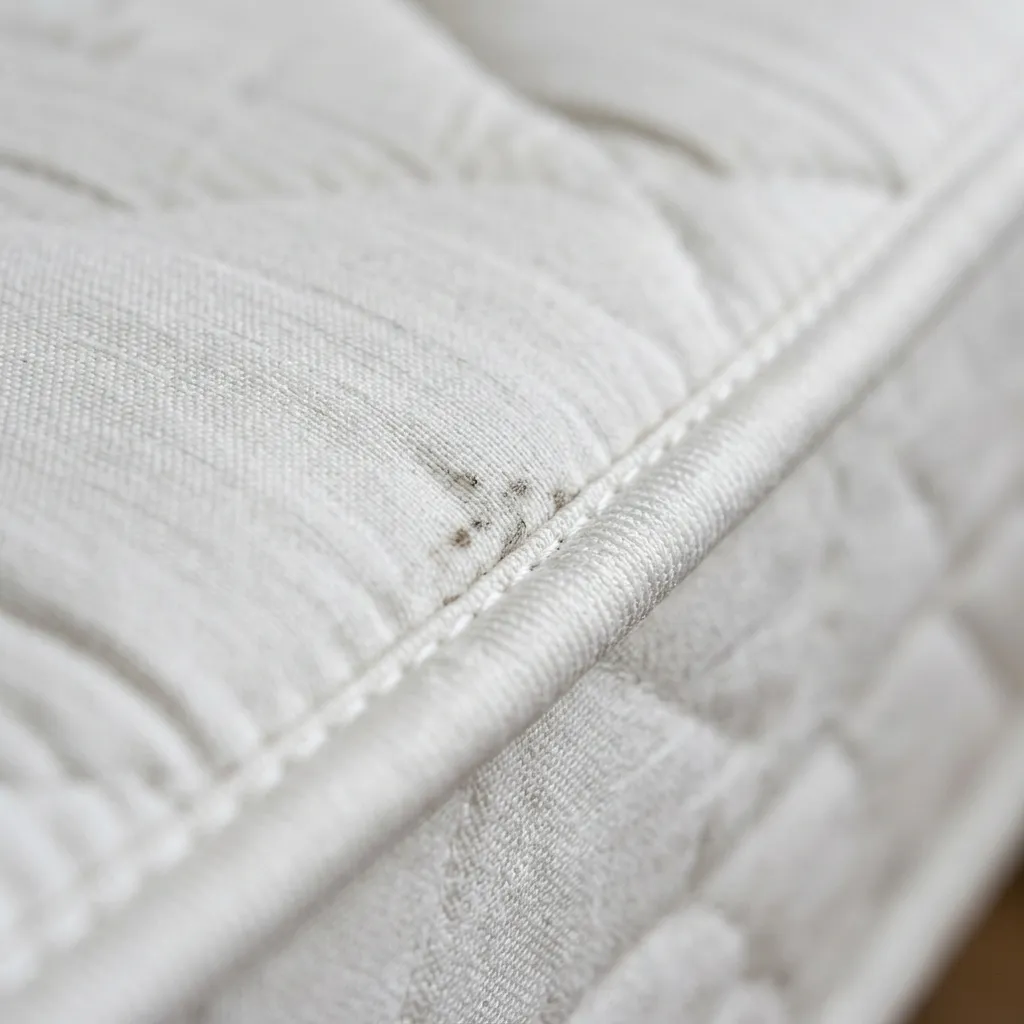 Faecal spotting along a mattress seam: the main confirmatory sign.
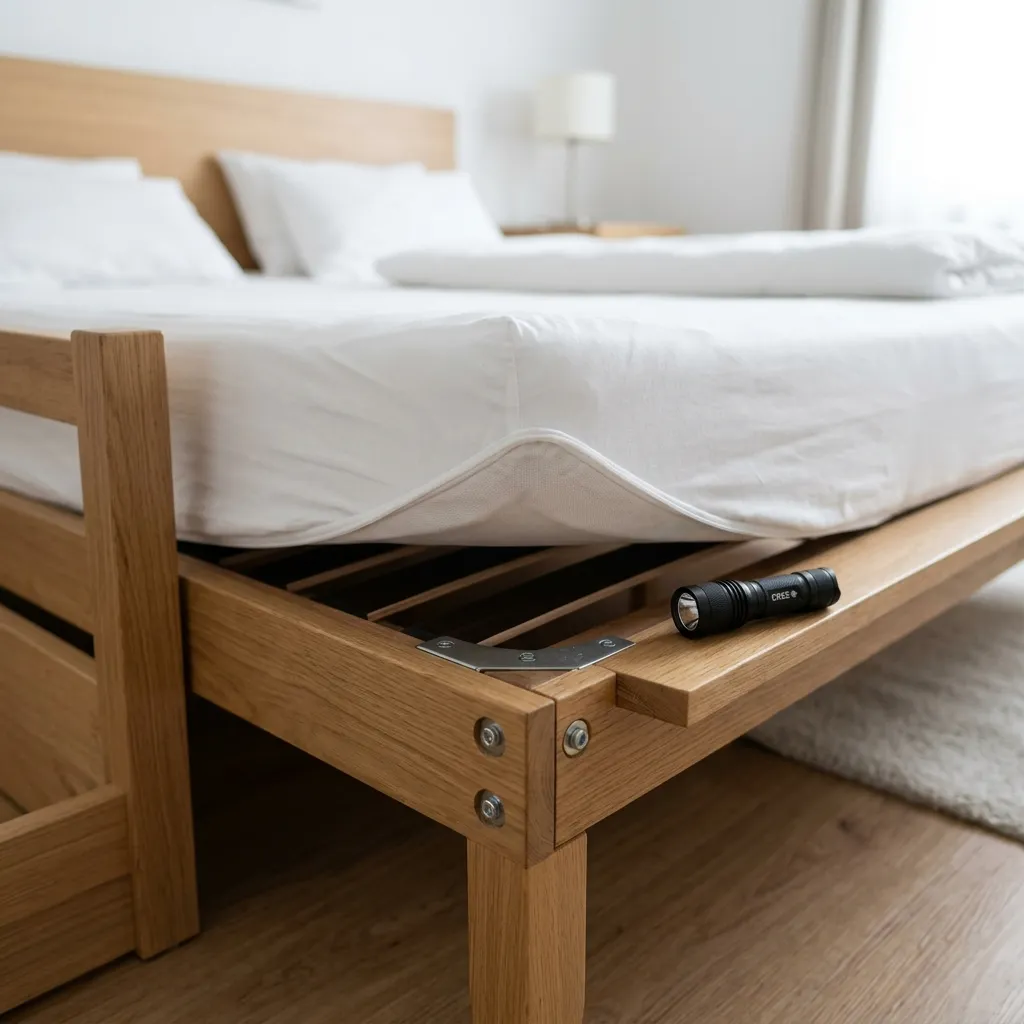 The ensemble base and frame joints harbour more bugs than the mattress itself.
Five steps, in this order. Skipping any of them is the usual reason a treatment fails.
The inspection is the job. One of the most common reasons control fails is that the inspection missed hiding places, and it also sets the true scope, which is what makes an accurate quote possible.
We start at the mattress and work outward. The ensemble base is more likely to harbour bugs than the mattress itself, and we will need to remove the material covering the underside of the base to see it. Metal bed springs, hollow bed posts, wooden slats and their bolt holes, plastic caster legs, bed heads (including ones fixed to the wall), bedside furniture, drawers, carpet edges, skirting, architraves, power points and switch plates, picture frames, curtains and blinds all get checked. In any real infestation we also need to look at adjoining spaces, next door, above and below.
This takes time and it is intrusive. That is not thoroughness for show. It is the difference between eradication and a treatment that quietly fails.
Before treatment you receive a plan in writing. Under the code, it should set out the findings of the assessment including where bugs were found and how heavy the infestation is, the treatment process and timeframe, the non-chemical methods and the specific insecticides to be used and where, when you need to be out and when you can return, what you are responsible for, realistic expectations, the follow-up schedule, warranty and its limits, and the price for eradication rather than for one visit.
If a company will not put that in writing, you do not have a plan. You have a booking.
Three things make an infestation worse and more expensive, and people do all three before they call:
After the inspection, we give you a preparation list. It normally includes bagging and sealing linen, curtains and clothing in the room before removal, then washing at 60°C or hot tumble drying dry items for at least 30 minutes. One NSW-specific catch: plumbing rules cap hot water at personal hygiene fixtures, so bathroom hot water may not kill every egg. Laundry and kitchen taps are not subject to that cap and generally run near 60°C. If you are relying on hot water, confirm the temperature.
If you are elderly, unwell or unable to do the preparation, tell us at booking. We will arrange it rather than let it become a reason the treatment fails. More household prep advice is in our residential pest control guide.
No single method eradicates bed bugs. Each does something the others cannot.
| Method | What it does | Its limit |
|---|---|---|
| HEPA vacuuming | Removes live bugs and debris, and lets insecticide penetrate cracks better | Eggs are glued in place and resist suction. Bugs grip inside crevices |
| Steam | Kills all stages including eggs, which most insecticides do not | Non-residual. Cannot be used on electrical fittings. Slow |
| Contained heat | Bed bugs die rapidly above 45°C. Best on infested items in a contained "bubble" | Whole-room heat is less reliable alone, especially with clutter or heat sinks like tiled floors. Requires trained operators |
| Residual insecticide | The only method that keeps working on bugs you did not directly contact | Resistance is widespread. Product and placement decide whether it works |
| Freezing | Useful for small delicate items | A domestic frost-free freezer may need days |
| Mattress encasement | Seals an infested mattress or base so the bugs eventually starve, and saves replacing it | Must stay on far longer than six months, because bed bugs can survive that long without feeding |
Only insecticides registered or permitted by the APVMA for bed bug control are used, and only as the label directs. Your written plan lists the specific products applied at your property and where.
Follow-up is normally required, and heavier infestations may need more than one visit. A final inspection helps determine whether activity remains. Ask the quote to state the included visits and return-service conditions.
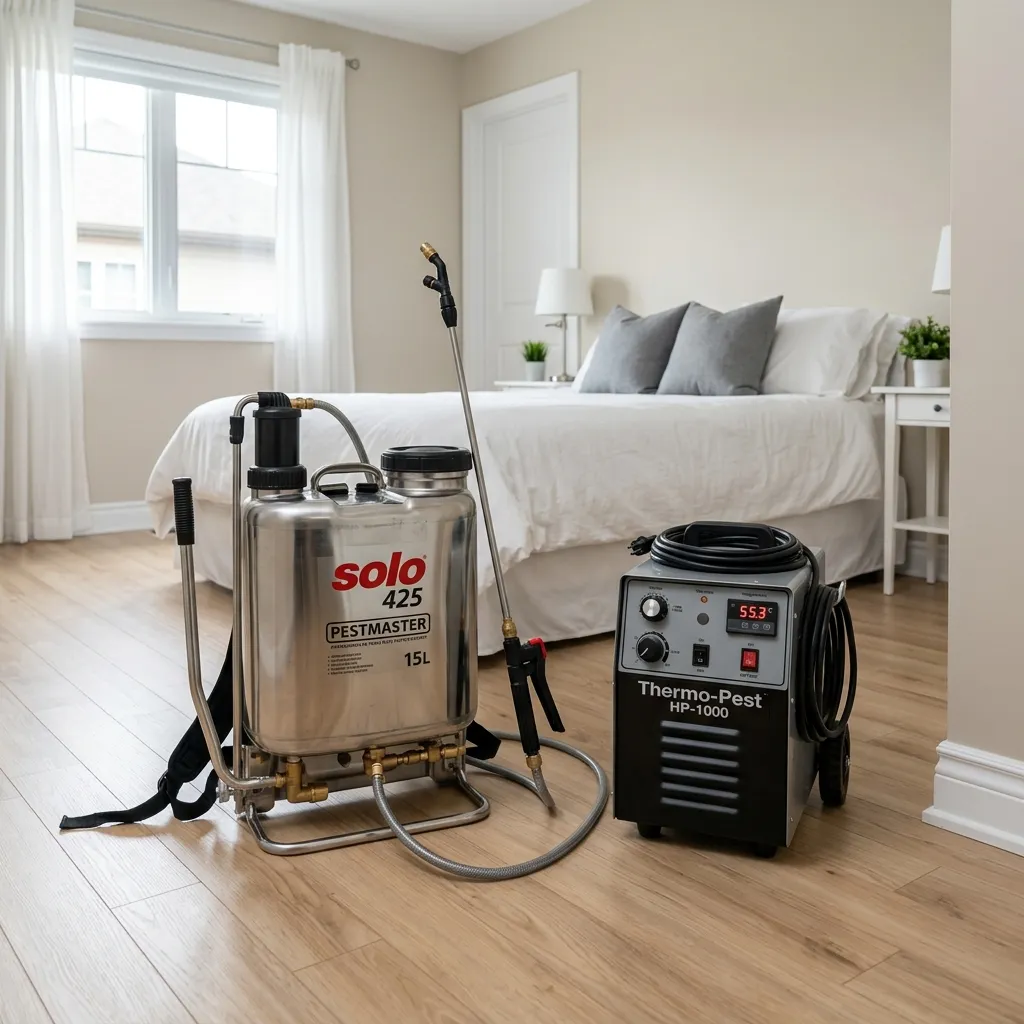
HEPA vacuum, steamer, contained heat and targeted residuals travel to every bed bug job. Which combination we use, and where, is decided by the inspection findings and written into your plan before work starts.
Book an inspection and get a written plan »This is the part most Sydney bed bug pages leave out.
Resistance is the reason, and it is documented. Australian research using insecticide-resistant field strains of the common bed bug found that permethrin, a third-generation synthetic pyrethroid, gave virtually no control, and natural pyrethrins gave none at all. In residual tests, most chemical groups managed no better than 50% mortality after ten days. Resistance has now been reported to almost every chemical group on the Australian market. APVMA registration does not prove a product works on resistant strains, because efficacy data against modern strains is not required for registration.
That is why the industry code says elimination with a single treatment is unlikely, that follow-up inspections are always required, and that repeat treatments are usually necessary even in minor infestations.
 In unit blocks, adjoining apartments above, below and either side need checking.
 Strata coordination early is the difference between one treated unit and a treated block.
A large share of Sydney sleeps in apartments, and that changes the job.
If you live in a unit, the infestation may have come from a neighbour. Adjoining units either side, above and below should be inspected. Often they cannot be. If a unit is privately owned and the resident refuses access, no one can force entry, and while that unit stays infested, reinfestation is likely no matter how well your unit is treated.
We will tell you when that is the situation you are in, and what it means for the warranty, before you commit. If your building has a strata manager, involving them early is usually the difference between one treated unit and a treated block. For body corporates and building managers, our commercial pest control service covers building-wide programs and documentation.
High-density areas like the Sydney CBD, Surry Hills, Newtown and the Inner West make up a large part of our bed bug work for exactly this reason.
We quote after an inspection, because the honest answer depends on what is there. The things that move the number:
Mostly a function of how long it has been going and whether anything has been sprayed or moved.
Heavy infestations need multiple treatments and frequent inspections.
Ensemble bases, metal springs and wooden slats all take substantially longer to treat properly.
Exposed brickwork means treating every mortar line. Gappy skirting and hollow fascia are slow.
Control in a cluttered room is not possible until the clutter is removed, treated or discarded. Chipboard and wicker are excellent bed bug habitat.
A property that has been bombed is a bigger job than one that has not.
For indicative ranges across pest types and how to read a quote, see our Australian pest control price list and the cost section of the bed bugs control Sydney guide.
NSW Fair Trading's position is that responsibility depends on whether the pests were already a problem when you moved in, whether a problem with the property let them in, and whether the tenant contributed.
In short: landlords are generally responsible for pest and vermin issues that exist at the start of the tenancy, as part of providing a reasonably clean property fit to live in. Tenants are generally responsible if the issue arises after they move in and was caused by their activities or lack of cleanliness. Where it is unclear, the property's history, the condition report and factors outside the tenant's control all matter. Disputes can go to Fair Trading's dispute resolution service on 13 32 20.
For bed bugs specifically, cleanliness is rarely the cause, which matters when a claim is made about "lack of cleanliness". Bed bugs are brought in, usually on luggage, second-hand furniture, or from an adjoining unit. Whatever the argument, an independent written inspection report dated early is worth more than either side's opinion.
This is general information, not legal advice. If you are moving out of a rental, our end of lease pest control service provides the documentation agents ask for.
Use this before you book anyone.
| Check | How | Why it matters |
|---|---|---|
| Current EPA licence | Every NSW pesticide licence is on the EPA public register. Ask for the number and look it up | Applying pesticides for reward in NSW requires a pest management technician licence under the Pesticides Act 1999 |
| Current insurance | Ask for both public liability and professional indemnity | Bed bug work involves dismantling beds and lifting carpet |
| A written eradication plan | Ask to see a sample from a comparable job, names removed | No plan, no scope, no accountability |
| Follow-up included | Ask how many visits and at what interval | One visit and "see how you go" is the documented red flag |
| Price for eradication, not per visit | Ask for the whole-job figure | Per-visit pricing hides the real cost |
| Bed bug specific training | Ask what training they have in bed bug identification, biology and management, beyond a general licence | Bed bugs are widely considered the hardest pest to control |
| Response time and warranty | Ask, and get it in writing | Verbal promises do not survive a dispute |
You can read the standard yourself. The Industry Code of Best Practice for Bed Bug Management is free from AEPMA, and includes a section on choosing a pest manager. More about who we are is on our about page.
For accommodation operators, speed and discretion are everything, and the code requires an infested room to stay closed until the infestation is declared eradicated. We work around occupancy schedules, treat affected and adjoining rooms, and can set up routine inspection programs so problems are caught before guests notice. City properties can book our bed bug treatment for CBD hotels and apartments.
If you run a hotel, hostel, student housing or serviced apartments, start with our commercial pest control service and the commercial pest control guide, or read about why routine commercial programs pay for themselves.
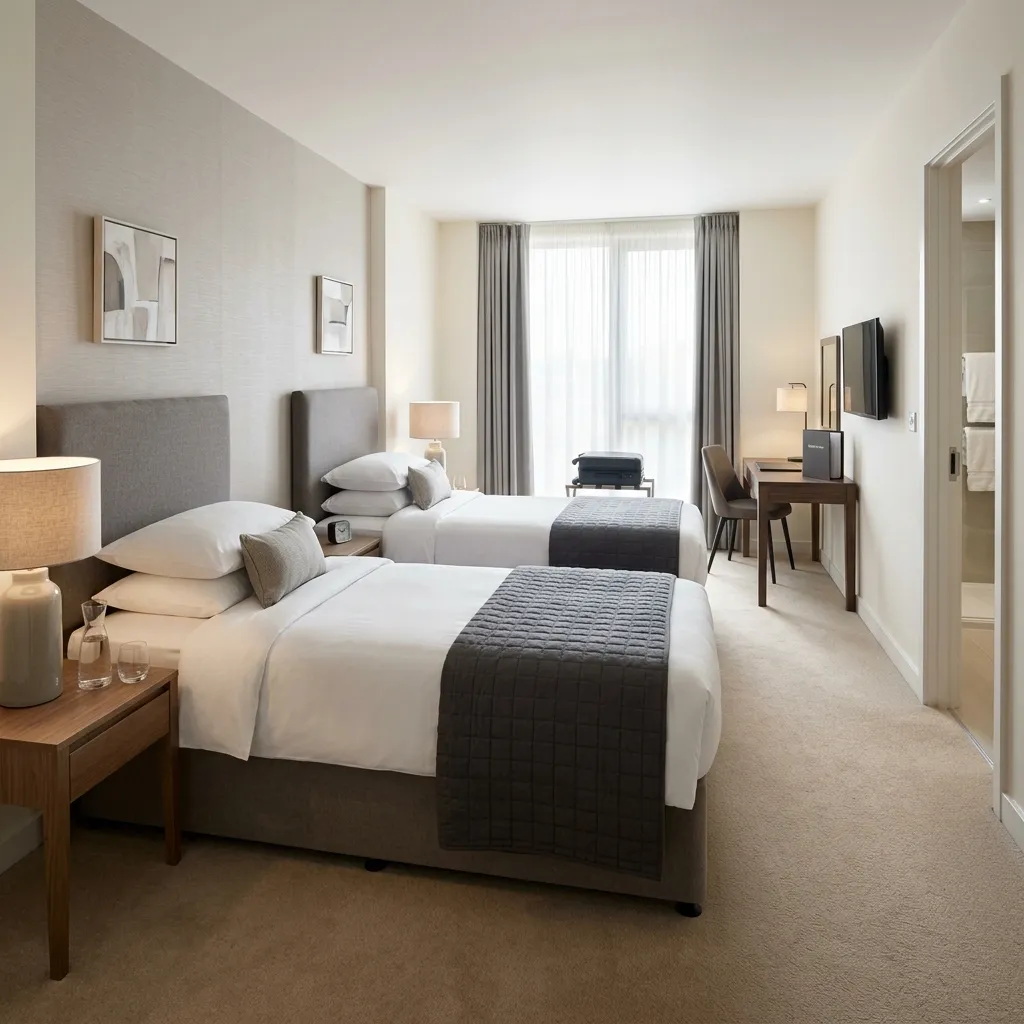
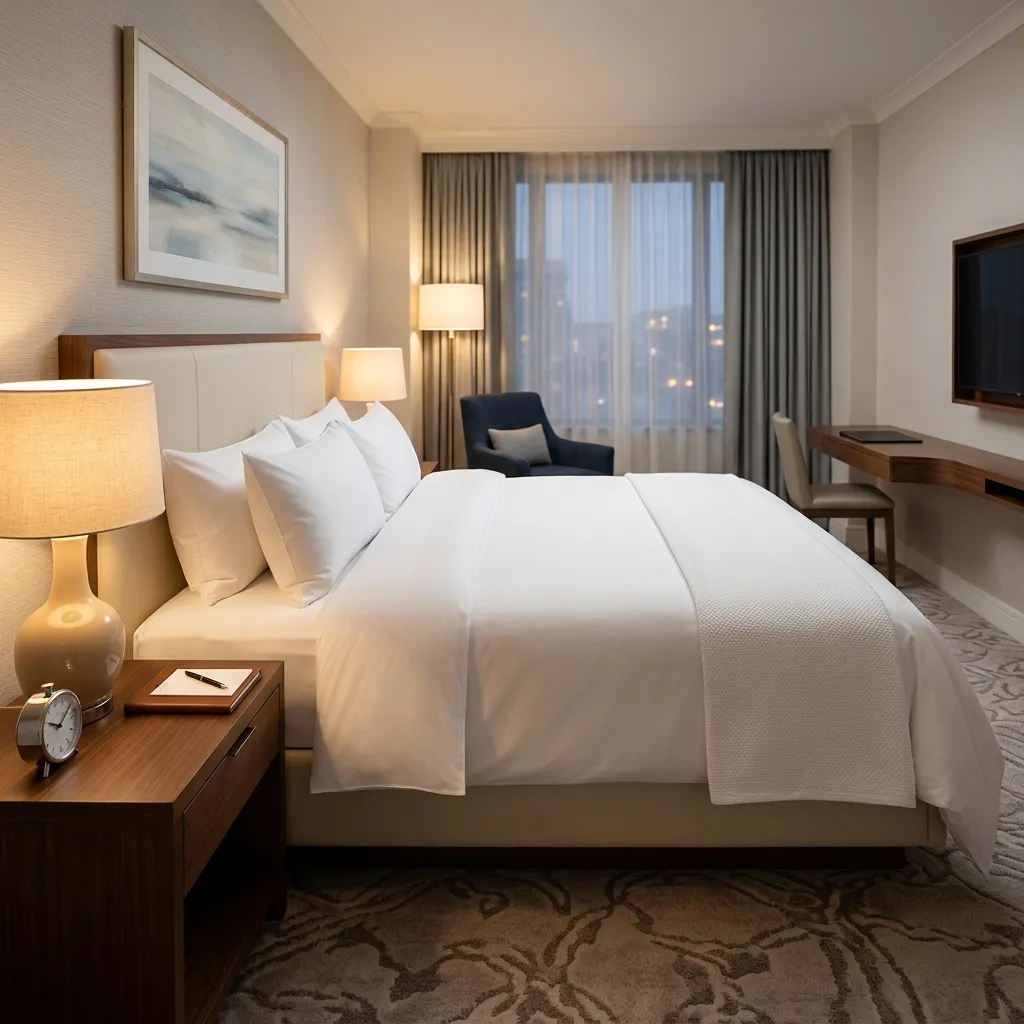 Routine inspection programs catch hotel infestations before reviews do.
Bites without bed bug evidence often turn out to be another pest. These services cover the usual suspects:
Flea bites are the most common bed bug lookalike. Our flea treatment covers pets, carpets and yards.
Nymphal cockroach droppings mimic bed bug spotting. Cockroach treatment uses the same crack-and-crevice skills.
Moving out of a rental? End of lease treatment with the paperwork your agent expects.
Hotels, strata and offices: commercial programs with reporting and compliance documentation.
Rat mites can cause bed-bug-like bites. Rodent control removes the host.
Bird mites from roof nests bite like bed bugs. Bird nesting control fixes the source.
Trail-based ant treatment for kitchens, walls and gardens across Sydney.
Browse every treatment we offer on the full services page.
Check your suburb on the Sydney locations page, check typical pest control costs in Sydney, or contact our team to book.
Straight answers about bed bug treatment in Sydney.
Tell us what you have found and where, and whether anything has been sprayed or moved. We will inspect, identify the pest, and give you a written eradication plan with a price for the whole job before any treatment starts.
We treat bed bugs across Greater Sydney. Click your area for local availability.
Sources: AEPMA and NSW Health Pathology, Industry Code of Best Practice for Bed Bug Management, 5th edition, May 2022 (aepma.com.au). NSW Fair Trading, Pests or vermin in a rental property (nsw.gov.au). NSW EPA, Pest management technicians, fumigators and training permits (epa.nsw.gov.au). Page last reviewed July 2026 by the Super Pest Controler team.
Related reading: How to get rid of bed bugs · Pest control price list · Residential pest guide · Commercial pest guide · Best season for pest control