Bird Proofing for Solar Panels: What Works, What Doesn't, and What It Costs in Australia
Over 3.5 million Australian homes run rooftop solar - and pigeons have noticed. This is a working pest controller's guide to stopping birds from nesting under your panels, protecting your system output, your roof, and your warranty.
The short version
- Pigeons choose solar panels because the 100-150 mm cavity underneath is warm, sheltered, and predator-free - once they nest there, they return every breeding season.
- Real damage includes 10-30% output loss, corroded wiring, blocked gutters, fire risk from dry debris near DC cables, and health risks from dried droppings.
- Mesh is the gold-standard fix - clip-based, no-drill installation preserves panel warranties. Spikes and skirts are supplements, not standalone solutions.
- Cost: $500-$1,500 for a standard 6.6 kW system. Pays for itself within 2 years through preserved solar output alone.
- DIY kits exist but the most common call-backs we fix are botched DIY installs with gaps, wrong clips, or drilled panels.
This page compares methods and costs. Need something more specific?
- Birds are already nesting under your array. The job becomes a removal sequence with a fixed order, and sealing too early makes it worse. Read how to get rid of birds already nesting under solar panels.
- You are in Sydney. Coastal salt air, roof type, strata approvals and suburb coverage change the spec. Read solar panel bird proofing in Sydney.
- You want a quote. See the solar bird proofing service or book a free assessment.
Why birds nest under solar panels in the first place
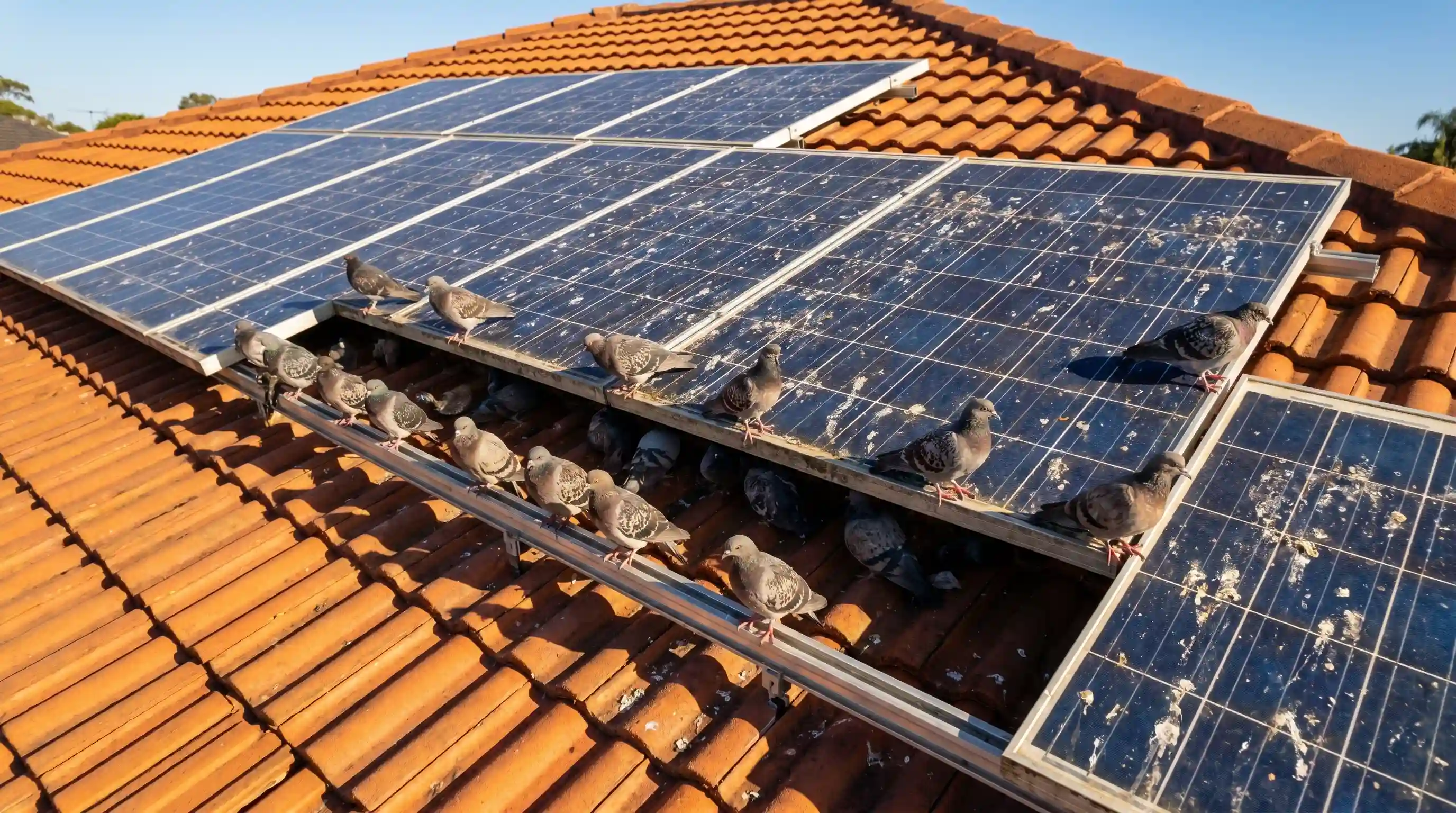
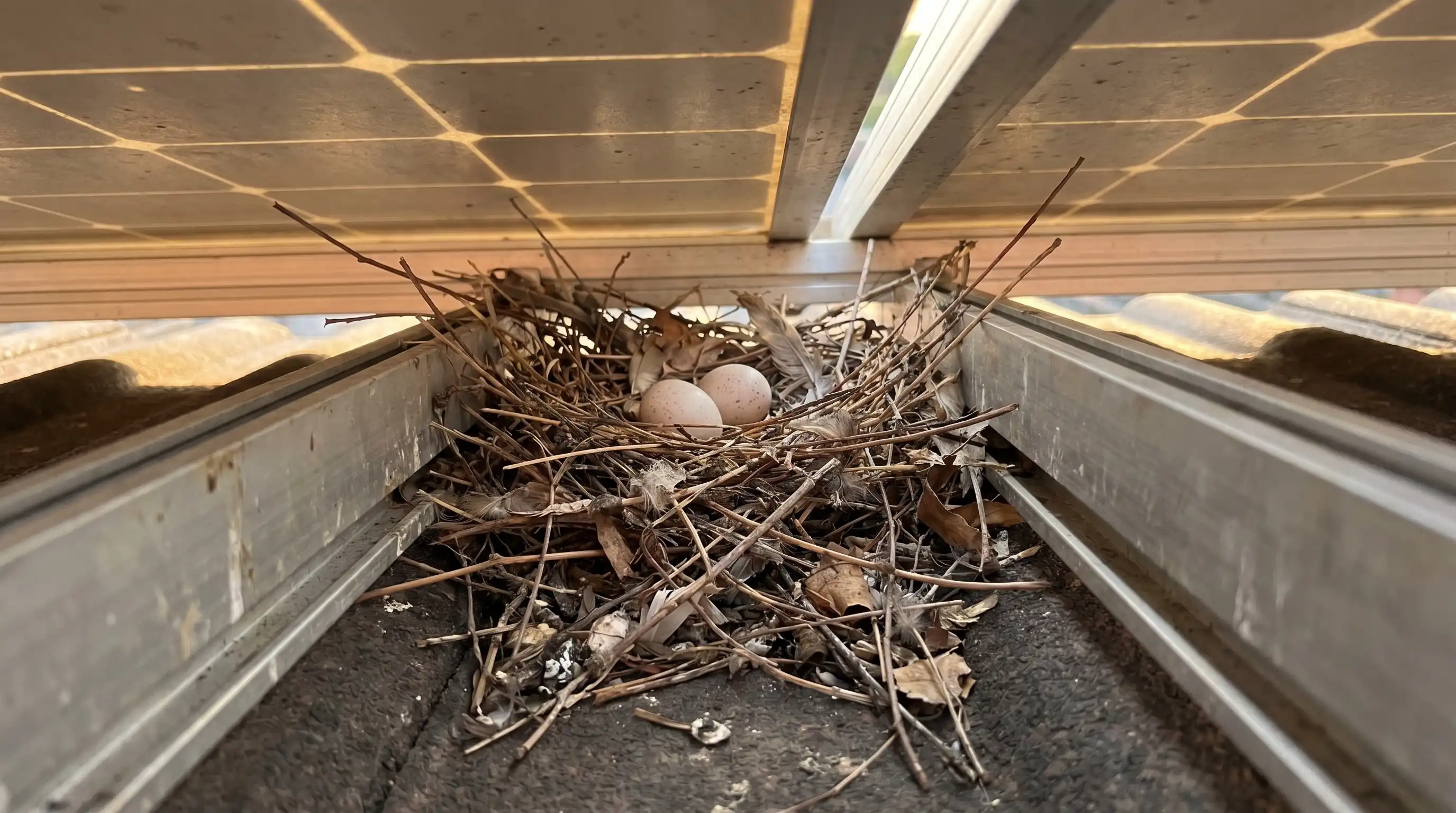
Solar panels weren't designed as bird habitat - but they may as well have been. The gap between panel and roof (usually 100-150 mm) is sheltered from rain, hidden from hawks, slightly warmed by the panel above, and supported by a sturdy aluminium frame that holds nesting material in place. From a pigeon's point of view, it's near-perfect.
Feral pigeons (Columba livia) are the species we encounter most, particularly across Sydney, Melbourne, Brisbane and the Gold Coast. Starlings appear in regional Victoria, Indian mynas around inner-city Sydney, sparrows almost everywhere, and on coastal jobs we occasionally find seagulls. Possums use the same gap, and once one species moves in, others follow.
Pigeons are site-faithful. Once they've raised a brood somewhere, they return to that exact spot for years - and so will their offspring. Simply scaring birds off without a physical barrier is, at best, a temporary fix.
The damage isn't theoretical
There's a tendency online to either underplay the problem ("they're just birds") or oversell it. The reality sits in between - and it adds up faster than most people expect.
Reduced solar output
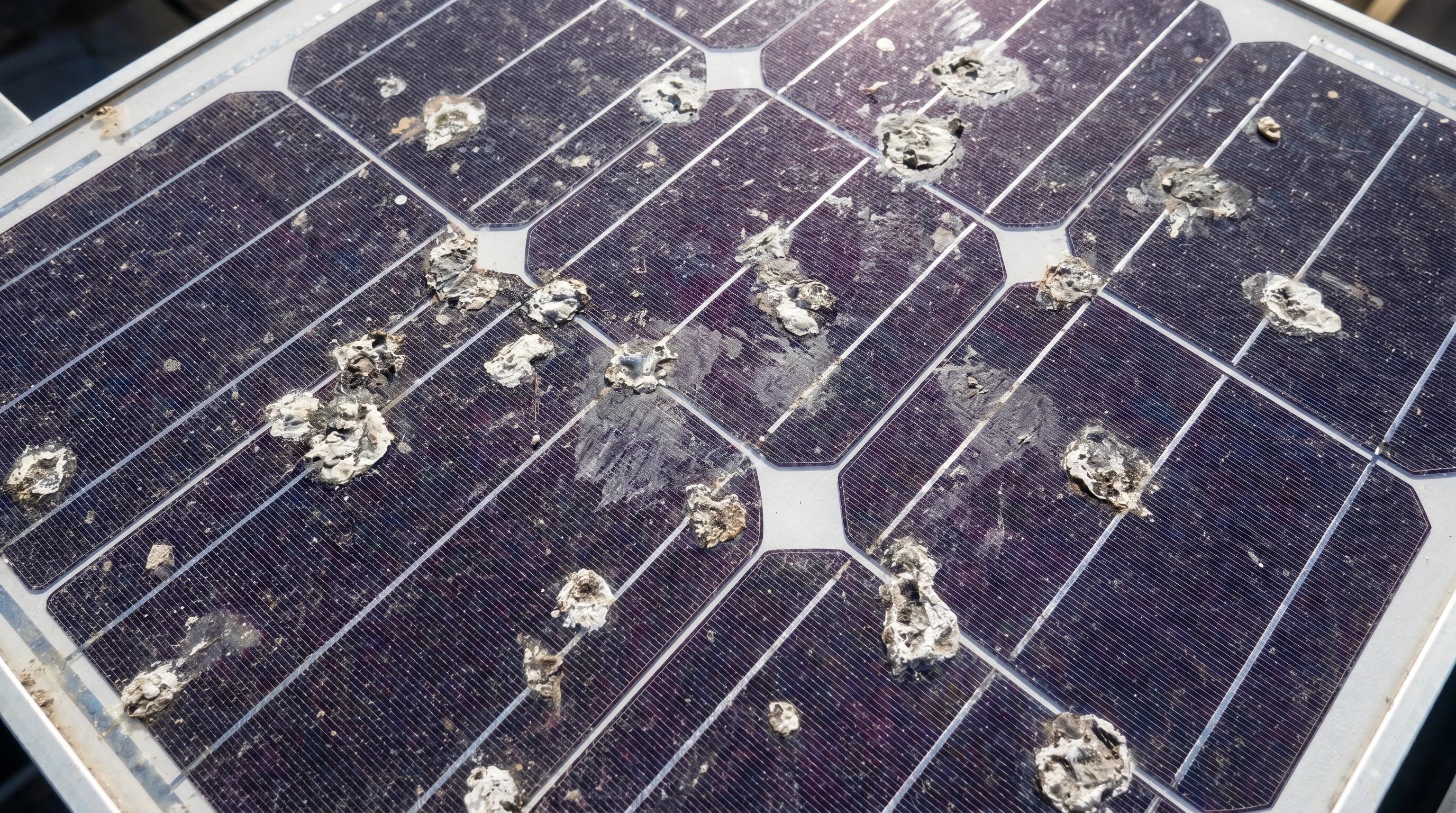
Droppings on glass create localised shading that triggers bypass diodes and knocks out entire strings. Nesting debris blocks airflow - hotter panels produce less. Real-world losses: 10-30% in summer on heavily fouled systems.
Corrosion of components
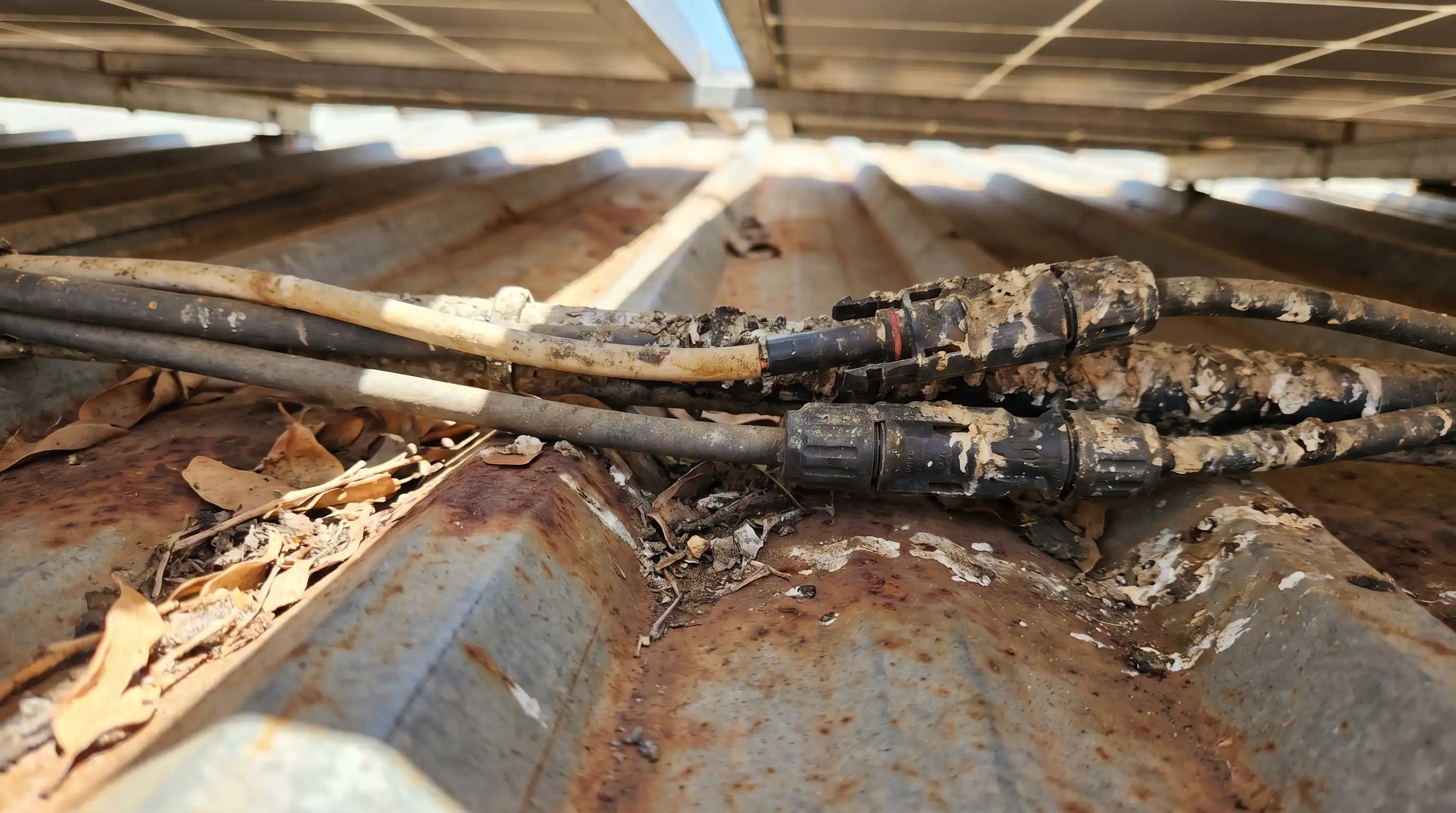
Droppings are mildly acidic (pH 3-4.5), etching anti-reflective coating over time. Underneath, cable insulation, MC4 connectors and earth straps sit in the splash zone. We've pulled out wiring with the outer sheath crumbling after just a few years.
Blocked drainage & water damage
Nesting material washes into gutters and downpipes. Once gutters back up, water finds its way under flashings and into eaves. We've found stained ceiling cornices caused by a pigeon colony two storeys up.
Fire risk
Dry nesting material packed against DC wiring and junction boxes is a credible ignition source if a fault occurs. Not a common everyday risk - but rooftop solar fires do happen in Australia, and bird debris is a recognised contributing factor in fire investigation reports.
Health risks to your household
Pigeon droppings can carry Chlamydia psittaci (psittacosis), Cryptococcus neoformans (cryptococcosis), Histoplasma capsulatum, salmonella and E. coli. As droppings dry and break down, fine dust can enter roof cavities or ducted air conditioning. The risk is meaningful for infants, the elderly, immunocompromised people and pets. Bird mites are a separate, visible problem - they bite and a roof infestation is genuinely unpleasant.
Warranty erosion
Most tier-1 panel manufacturers will not honour a warranty claim where damage is attributable to bird ingress, and most installers' workmanship warranties exclude it too. Read your own paperwork before deciding whether proofing is "optional".
The main bird proofing methods, ranked by what actually works
Not all products on the market are worth the money. Here's how common options perform in Australian conditions, based on what we install and what we've been called back to fix.
Solar panel mesh
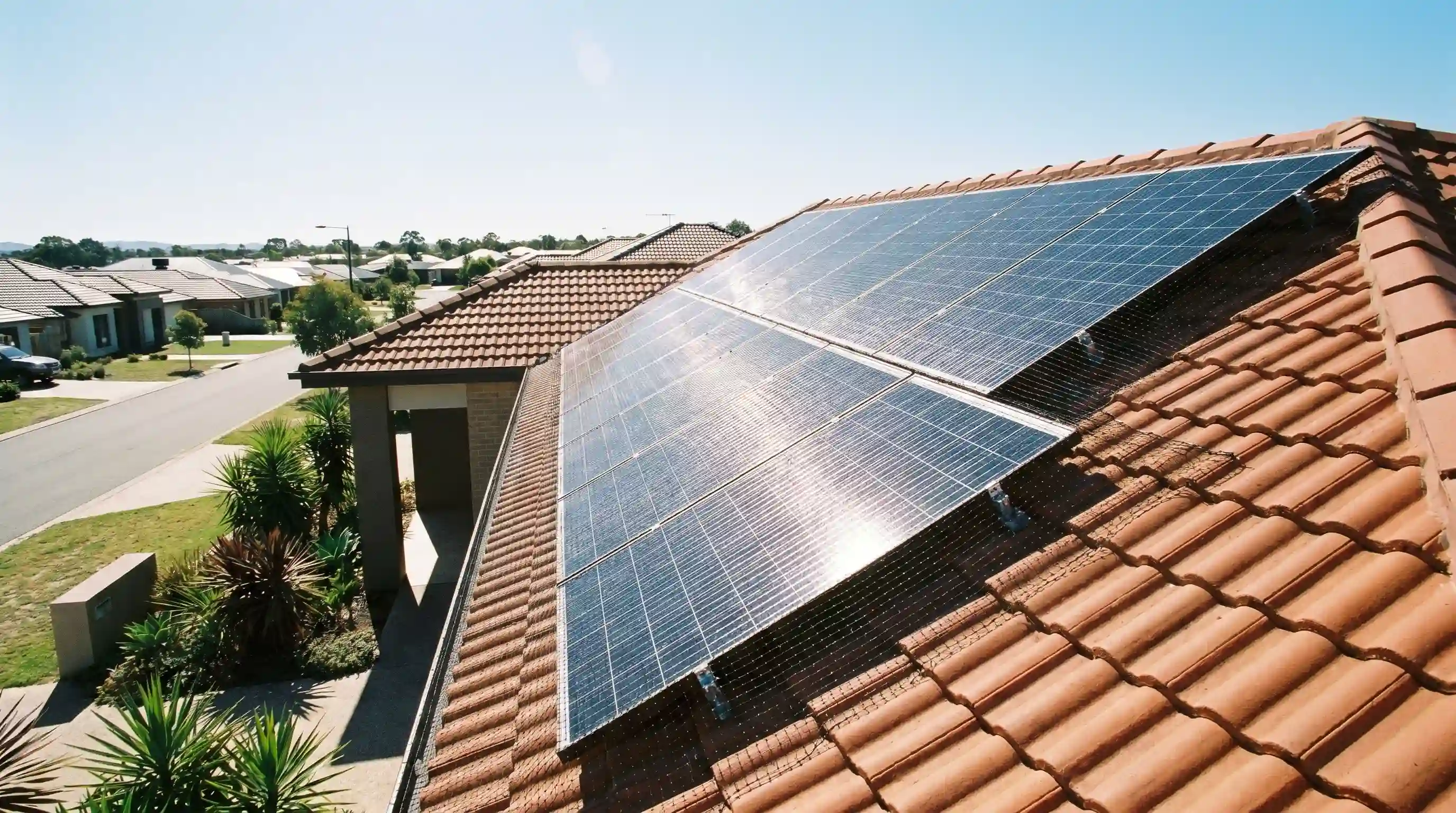
Gold standard - 9 in 10 installsFlexible mesh (10-25 mm aperture) fitted around the entire panel perimeter using clips that grip the frame. Birds can't get under, airflow is preserved, and the array still gets washed by rain.
PVC-coated galvanised steel
Traditional choice. Strong, holds shape, reasonably priced. UV coating degrades over time; can cause galvanic issues on Colorbond roofs.
316-grade stainless steel with PVC coating
Our recommendation for coastal sites - anywhere within a few km of salt air. Costs more but doesn't rust. Worth it on Sydney or Gold Coast roofs.
UV-stabilised HDPE plastic mesh
Popular for Colorbond roofs - can't scratch the steel or cause galvanic corrosion. Lighter and easier to handle. Not as tough against possums.
Critical: Fixings must clip to the panel frame - no drilling, no adhesives, no fasteners through the panel or roof. This is the warranty-safe approach. If anyone proposes screwing or gluing mesh to your panels, walk away.
Bird spikes
Useful supplement - not a standalone solutionSpikes work on flat ledges and parapets, and are useful around array edges to stop birds landing and walking under. They don't proof the panel itself - birds can still flutter directly into the cavity. We use spikes as a complement to mesh on commercial jobs and difficult roof geometries, never as the primary defence on a residential array.
Solar skirts
Tidier aesthetics, some airflow trade-offRigid plastic strips clipped around the panel perimeter - the same idea as mesh but solid. They look tidier from the ground and install fast. The trade-off: a solid skirt restricts ventilation more than mesh, and on north-facing arrays in hot climates that can reduce summer output marginally. They're also less forgiving on irregular panel layouts. We install them when the homeowner specifically requests them, but mesh is generally the better engineering choice.
Deterrents (decoys, ultrasonic, gels)
Not recommended for active nesting sitesPlastic owls, reflective tape, ultrasonic emitters, optical gel pots. We've tested most. They produce a few weeks of mild discouragement, then birds adapt. Pigeons are smart enough to figure out the owl never moves. As a primary solution for a site birds have already chosen, deterrents are close to useless. As a supporting measure on a clean roof that hasn't yet been colonised, they have some value. We don't sell them as a fix. If birds are already nesting under your panels, the job is a removal sequence rather than a deterrent choice.
What about DIY mesh kits?
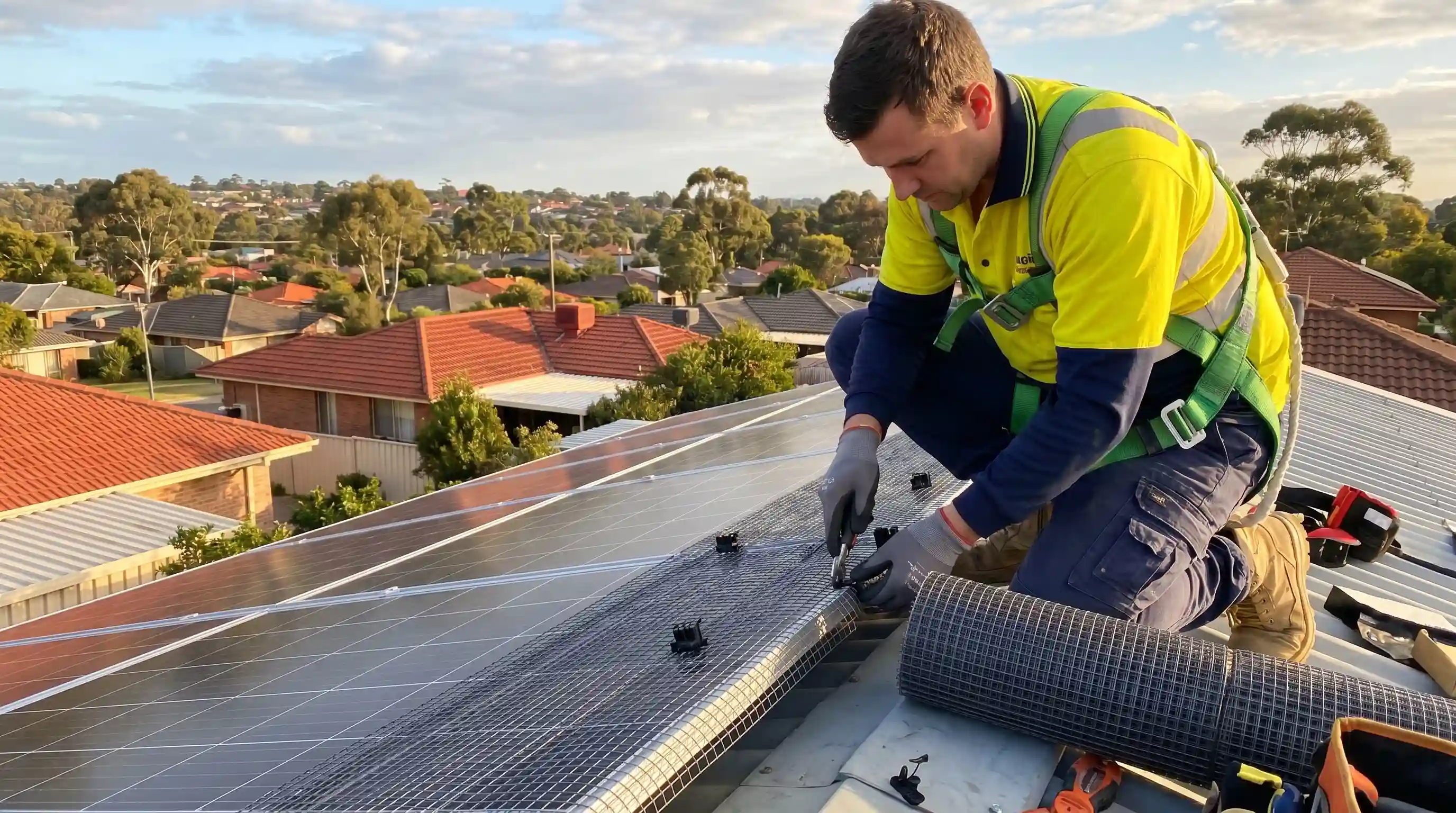
DIY kits are available online for $250-$450. If you're confident on a roof, comfortable at heights with proper safety equipment, and the array is small and single-storey, a kit can work.
The honest caveats: most failed proofing jobs we're called to repair are DIY installs. Common failures: gaps at corners, mesh sagging from wrong clips, fixings drilled into panel frames (warranty voided), staples or wire ties that fail in the first hot summer. Working at height is where most serious roof injuries happen in Australian residential settings.
What it costs in Australia - and what drives the price
For a typical 6.6 kW system on a single-storey home, residential bird proofing falls between $500 and $1,500. Larger arrays, two-storey homes, steep tiled roofs and existing infestations push it higher - some jobs exceed $3,000 once heavy clean-up and nest removal are factored in.
Factors that increase cost
- Larger array or high panel count
- Steep pitch or two-storey (scaffolding/harness)
- Active nests requiring removal + disinfection
- Coastal sites needing 316 stainless mesh
- Metro vs. regional labour rates
The payback maths
A 15-25% output loss on a 6.6 kW system can cost $300-$500 per year in foregone feed-in or grid offset. A $1,000 proofing job typically pays for itself in 2-3 years through preserved generation alone - never mind gutters, roof damage and warranty protection.
How long does proofing last?
A properly installed mesh system using UV-stabilised PVC-coated steel or HDPE lasts 10-15 years on most Australian roofs. 316 stainless on a coastal property can comfortably exceed 20. Clips age first under UV - any decent installer warranties workmanship for at least 5 years.
Maintenance is light: once a year, check array edges with binoculars for sagging mesh, popped clips, or fresh droppings suggesting a gap. Panel cleaning (every 12-24 months, more in dusty rural areas) is independent of bird proofing - a good installer will pop a clip, do the clean, and replace it without disturbing the system.
What to look for in a bird proofing specialist
- Uses clip-based, no-drill fixings and explains why in writing
- Specifies mesh grade explicitly - not just "marine grade" as marketing language
- Includes nest and dropping removal in scope where applicable, with proper PPE and disposal
- Carries public liability insurance and working-at-heights certification
- Provides a written workmanship warranty
- Licensed for pest management in your state - bird control sits under pest management legislation in most Australian jurisdictions
Managing a shared, strata or commercial roof? Read how to handle approvals, WHS paperwork and building-level scoping before booking.
Frequently asked questions
Tap a question to expand the answer.