
Bowerbird Control Sydney: A Homeowner's Guide
A professional, humane guide to bowerbird control in Sydney - learn what’s legal, what works, and how to find expert bowerbird deterrent services across Sydney and surrounding suburbs.
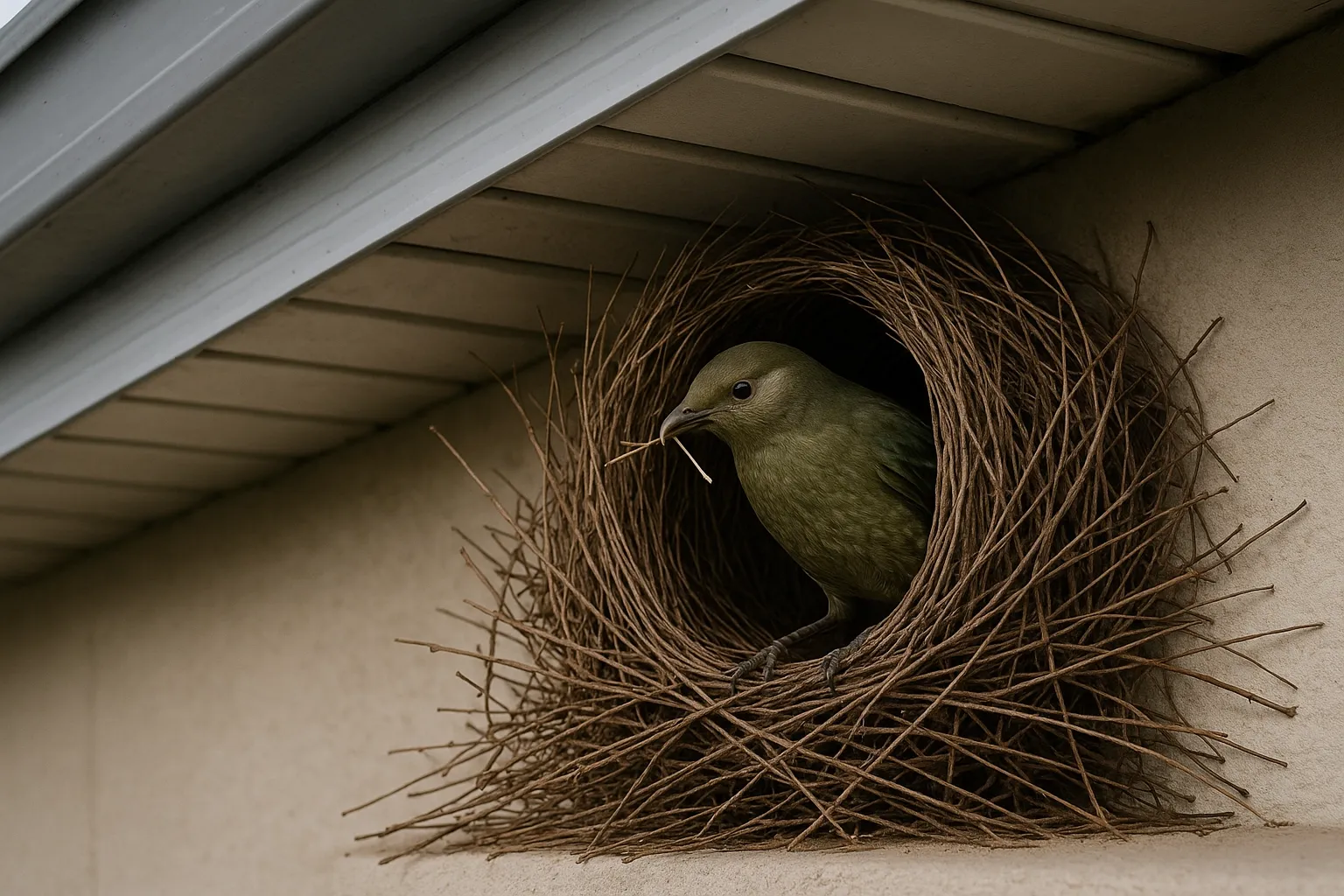
Why bowerbirds can be a problem
Satin and Great Bowerbirds are captivating, but their courtship habits can create headaches for homeowners. If you’re finding bright objects disappearing or prized flowers damaged, a humane bowerbird control plan can protect your space without harming wildlife.
Theft of small items
Males collect colourful items (often blue/yellow) for display - pegs, bottle caps, kids’ toys, even jewellery - leading to frustrating disappearances from decks and gardens.
Garden & plant damage
In pursuit of the perfect bower, they may strip flowers, pull seedlings, and disturb ornamental beds - common complaints in leafy Sydney suburbs like the North Shore and Northern Beaches.
Territorial behaviour
During mating season, males defend display areas and can swoop or act aggressively toward pets or passers‑by.
Mess & debris
Bower construction leaves twigs, leaves, and collected odds‑and‑ends scattered in otherwise tidy spaces.
Legal protections: bowerbirds are native & protected
All bowerbirds are native to Australia and protected by state and territory wildlife legislation. It is illegal to harm, trap, or kill bowerbirds or interfere with their bowers without a permit under the NSW Biodiversity Conservation rules.
Effective bowerbird pest control therefore relies on humane, non‑lethal deterrents and exclusion methods. Reputable providers always work within these laws.
What the law actually says in NSW
The satin bowerbird (Ptilonorhynchus violaceus) and regent bowerbird (Sericulus chrysocephalus) are protected fauna under the NSW Biodiversity Conservation Act 2016. In practical terms this means:
- You cannot harm, kill, trap or capture a bowerbird without a licence issued by NSW National Parks and Wildlife Service.
- You cannot destroy an active bower or nest containing eggs or dependent young.
- You can lawfully use non-lethal deterrents: netting, exclusion, removing attractants, visual scares and habitat modification.
- You can clear an inactive bower outside breeding season, though a licensed operator should confirm it is genuinely inactive first.
- Penalties for harming protected fauna in NSW are substantial and apply to homeowners, not just businesses.
How to Identify a Bowerbird (and What You Might Actually Have)
Correct identification matters, because the legal position and the effective deterrent both change with species. Most Sydney "bowerbird" callouts turn out to be one of four birds.
| Bird | Appearance | Tell-tale behaviour | Protected in NSW? |
|---|---|---|---|
| Satin bowerbird | Adult male glossy blue-black with violet eyes; females and young males olive-green with scalloped underparts | Builds a twig avenue on the ground and decorates it with blue objects - pegs, straws, bottle caps, bread tags | Yes |
| Regent bowerbird | Male striking black and gold; female mottled brown | Less common in Sydney; more frequent in northern NSW rainforest fringe | Yes |
| Australian magpie | Black and white, much larger, heavy bill | Swoops in spring; nests high in trees rather than building ground structures | Yes |
| Common myna | Brown body, black head, yellow eye patch and legs | Nests in roof cavities and wall voids - a genuine pest species, not a bowerbird | No - introduced species |
The single most reliable identifier is the bower itself. A satin bowerbird bower is not a nest - no eggs are laid in it. It is a display structure: two parallel walls of upright sticks about 30 centimetres long, built on the ground, with a cleared platform at each end holding a collection of blue objects. The actual nest is a separate shallow cup built high in a tree or vine, and it is the nest rather than the bower that holds eggs.
Why Bowerbirds Steal Blue Objects From Your Garden
Male satin bowerbirds collect blue items because females assess bower quality when choosing a mate, and blue decorations are the main criterion. Blue is naturally scarce in the Australian bush, so a male who accumulates a large blue collection is signalling foraging ability and competitive dominance. Suburban gardens are, from the bird's perspective, an unusually rich blue resource.
Items taken most often from Sydney properties:
- Blue plastic clothes pegs - by a wide margin the most commonly taken item
- Drinking straws, bottle caps and milk bottle rings
- Bread bag tags and pen lids
- Blue string, ribbon and cable ties
- Children's toy fragments and Lego pieces
- Blue flowers, particularly agapanthus and jacaranda petals
This is why removing attractants is the highest-leverage deterrent. Switching to wooden or neutral-coloured pegs, storing blue plastics in sealed containers and clearing blue debris from lawns removes the reason the bird is visiting at all - and it is entirely lawful, unlike interfering with the bird or its bower.
What Damage Do Bowerbirds Actually Cause?
Bowerbirds cause horticultural and nuisance damage rather than structural damage. Unlike pigeons or mynas, they do not nest in roof voids, do not block gutters with nesting material and do not create the bird mite problems associated with cavity-nesting species.
| Damage type | What it looks like | Peak period |
|---|---|---|
| Vegetable and fruit damage | Shredded leafy greens, pecked tomatoes, stripped berries and stone fruit | Spring to summer |
| Seedling loss | Young plants pulled out whole while foraging for display material | Spring |
| Flower stripping | Blue and purple blooms removed - agapanthus, jacaranda, salvia | Sep - Feb, bower-building season |
| Item theft | Pegs, straws and small blue plastics disappearing from lines and outdoor areas | Year-round, peaks in spring |
| Window strikes and territorial display | Repeated pecking at windows, mirrors and car panels against the bird's own reflection | Breeding season |
| Droppings | Localised soiling under favoured perches; minor compared with pigeon fouling | Year-round |
If you are seeing nesting material in gutters, droppings accumulating on solar panels, or mites indoors, the species is almost certainly not a bowerbird. Those are the signatures of pigeons, starlings or mynas - see our guide to birds nesting under solar panels.
Humane deterrents that work
The aim is to encourage birds to build elsewhere - not to eliminate them. A professional plan may combine these:
- Physical barriers: Fine bird netting over vegetable patches, fruit trees, or feature beds.
- Remove attractants: Store pegs and shiny items in sealed containers; tidy outdoor areas.
- Scare devices: Reflective tape, predator decoys, or motion‑activated sprinklers.
- Habitat tweaks: Prune shrubs or reposition furniture to disrupt preferred display spots.
Sydney suburb tips & services
Searching for bowerbird control near me? Look for specialists in humane bird management and ask about site assessments, netting quality, and maintenance.
North Shore
Leafy gardens often benefit from discreet netting and display‑area modifications around fruit trees.
Eastern Suburbs
Balcony planters and courtyards respond well to cover options that preserve ocean‑breeze airflow.
Hills District
Large yards benefit from zoned deterrents and tidy collection points to reduce object theft.
What affects the cost of professional help?
Bird management is bespoke - quotes vary with scope and complexity. Expect variations based on:
Size of area
Larger garden spans and fruiting trees mean more netting and labour.
Type of solution
A consult with scare devices costs less than custom structural netting installs.
Property access
Steep blocks, tall trees, or complex rooflines increase installation time.
Consultation & strategy
Site assessments identify habits and tailor a humane, effective plan.
Get a humane bowerbird solution
We provide expert advice and non‑lethal deterrent solutions across Sydney and surrounding suburbs. Protect your garden without harming native wildlife.

Bowerbird control - FAQs
Can you legally remove a bowerbird's bower?
No. Disturbing or destroying a bower is illegal because it is part of the bird’s breeding behaviour. Focus on humane deterrents that encourage relocation.
How much does professional bowerbird control cost?
Prices vary by scope. A simple consultation may be $150-$250, while custom garden netting can range from ~$500 to several thousand dollars depending on area and complexity.
What colours do bowerbirds avoid?
Preferences vary by species and context, but many gardeners report success using colours associated with danger or predators; red items are occasionally used as minor deterrents.
Do you offer services in my city?
Yes - our network provides humane bird management throughout Sydney and surrounding suburbs.
Why do bowerbirds steal blue things?
Male satin bowerbirds collect blue objects because females judge bower quality primarily on blue decorations when choosing a mate. Blue is naturally scarce in the Australian bush, so a large blue collection signals foraging ability and dominance. Suburban gardens are an unusually rich blue resource, which is why pegs, straws, bottle caps, bread tags, pen lids and blue flowers such as agapanthus disappear. Switching to wooden or neutral pegs and storing blue plastics out of sight is the single most effective lawful deterrent.
Is a bower the same thing as a nest?
No, and the distinction is legally important. A bower is a ground-built display structure: two parallel walls of upright sticks roughly 30 centimetres tall with a cleared platform at each end holding blue decorations. No eggs are ever laid in it. The actual nest is a separate shallow cup built high in a tree or vine. Both are protected under the NSW Biodiversity Conservation Act 2016 while in use, but it is the nest, not the bower, that holds eggs and dependent young.
Are bowerbirds protected in NSW?
Yes. The satin bowerbird (Ptilonorhynchus violaceus) and regent bowerbird (Sericulus chrysocephalus) are protected fauna under the NSW Biodiversity Conservation Act 2016. It is an offence to harm, kill, trap or capture them, or to destroy an active bower or nest, without a licence from NSW National Parks and Wildlife Service. Non-lethal deterrents - netting, exclusion, removing attractants, visual scares and habitat modification - are lawful and require no permit. Penalties apply to homeowners, not just commercial operators.
How do I stop bowerbirds eating my vegetable garden?
Exclusion netting is the only reliably effective method. Use fine bird netting with an aperture of 20 millimetres or less, held clear of the foliage on a frame rather than draped, so birds cannot reach through and wildlife cannot become entangled. Loose draped netting is both less effective and a genuine entanglement hazard for possums, snakes and flying foxes. Combine netting with removing blue attractants from the surrounding area, and expect strongest pressure from September to February during bower-building season.
A bird is pecking at my window repeatedly - is it a bowerbird?
Possibly. Male bowerbirds attack their own reflection in windows, mirrors and car panels during breeding season, interpreting it as a rival male. It is territorial display, not aggression toward you, and it stops once breeding season ends. Break up the reflection from the outside using decals, screens, soap marks or temporary shade cloth - interior blinds do not work, because the reflection forms on the outer glass surface.
When is bowerbird breeding season in Sydney?
Bower building and display run roughly from September through February, peaking in spring. This is when item theft, flower stripping, window attacks and garden damage all concentrate. Install netting and remove blue attractants in late winter, before display behaviour begins, rather than reacting in December. Any bower clearing should only be considered outside this window and only after a licensed operator confirms the structure is genuinely inactive.
Related reading
Bird Proofing for Solar Panels: What Works & What It Costs
Mesh, spikes and skirts compared - with real Australian prices and warranty-safe installation advice.
Bird ControlBird Proofing Under Solar Panels: Sydney
Humane, warranty safe bird mesh installation guides and costs for homeowners in Sydney.
Bird ControlBirds Already Nesting Under Solar Panels? Sydney Removal Guide
Species ID, NSW protection rules, bird mite timing and the correct clear-treat-seal order.
Wildlife RemovalPossum Removal in Roof: Sydney Expert Guide
Scratching in the ceiling? Learn licensing, costs, and the evict-and-seal method used by licensed technicians.