Commercial bird control guide
Bird Proofing Solar Panels on Commercial and Strata Roofs in Sydney
If you manage a building rather than own a house, the hard part of this job is not the mesh. It is working out who can approve the work, what paperwork you are expected to hold, and how to scope a roof that has more than one owner on it.
Quick answer
Approval comes before installation
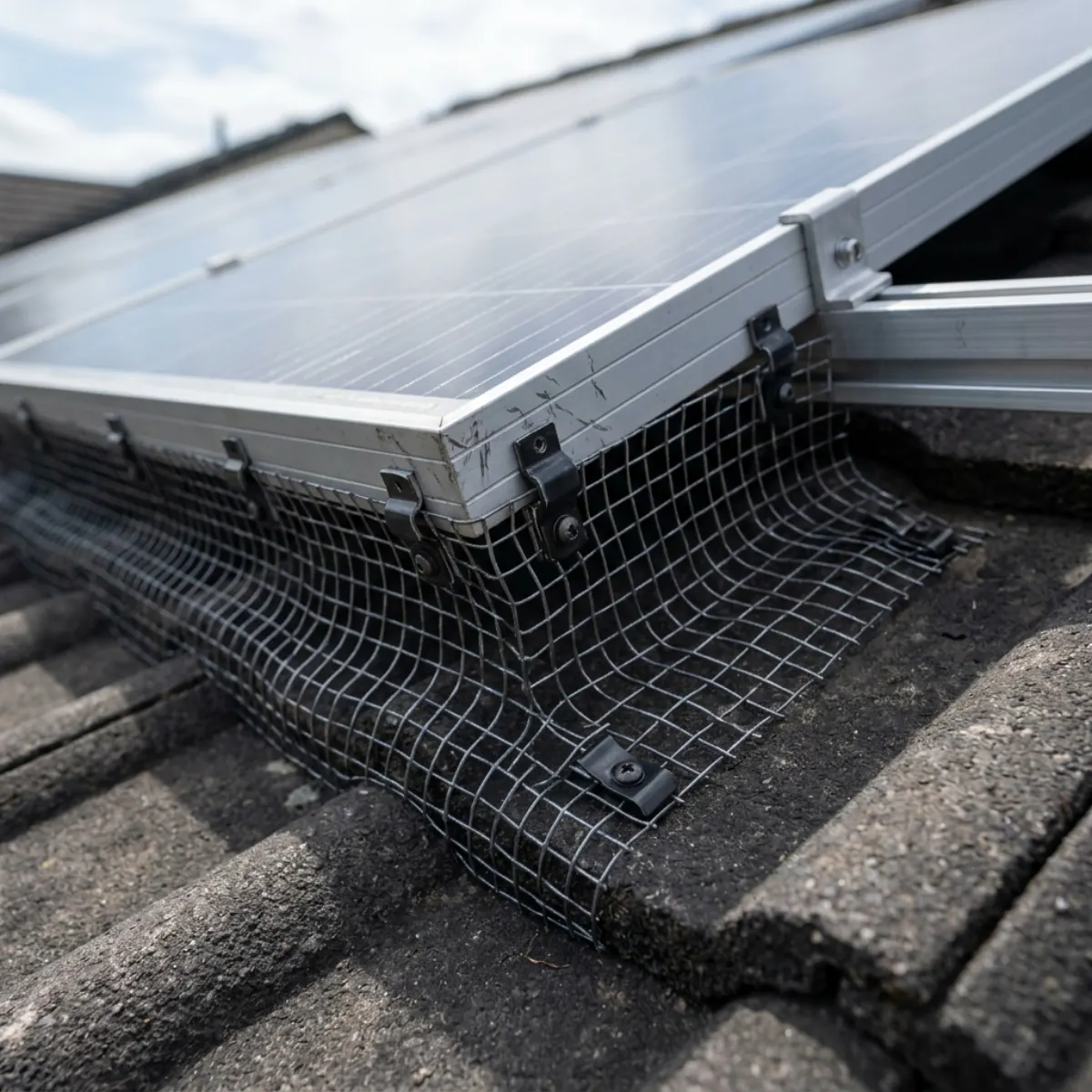
On a strata roof the roof is almost always common property, so the owners corporation authorises the work even when the panels belong to one lot. On a commercial site the business controlling the workplace has safety duties that do not transfer to the contractor, so you should hold a safe work method statement, a certificate of currency and evidence of height safety training before anyone goes up. Scope the work across the whole roof rather than one array, because birds excluded from one section relocate to the next.
For mesh materials, methods and residential pricing, see the bird proofing methods and costs guide. This page is about getting a building-level job approved and documented.
The strata path
The roof is common property, even when the panels are not
In most Sydney strata schemes the roof structure is common property. Panels installed by a single lot owner, usually under an approval or a by-law, do not change that. Work that involves accessing, fixing to or altering the roof therefore runs through the owners corporation rather than through the lot owner, whatever the panels' ownership.
Check your strata plan and your scheme's by-laws rather than assuming. Schemes vary, and a common property memorandum or a specific by-law can shift responsibility in ways the general rule does not predict.
The owners corporation has a statutory duty to maintain
Section 106 of the Strata Schemes Management Act 2015 requires an owners corporation to properly maintain and keep in a state of good and serviceable repair the common property, and to renew or replace fixtures and fittings comprising common property. It is a strict duty. A lot owner can recover reasonably foreseeable loss caused by a breach of it as damages, and has six years from becoming aware of that loss to bring an action.
That matters here for a practical reason. Persistent bird colonisation on a common property roof does not stay a cosmetic problem. Nesting material washes into gutters and box gutters, blocked drainage backs water under flashings, and the resulting damage is common property damage. A committee that has been told about it and left it is in a worse position than one that obtained quotes.
This is general information about the framework, not legal advice on your scheme. If there is a dispute about who is responsible, that is a question for a strata lawyer.
Approval and by-laws
Ordinary maintenance and repair of common property is usually within what a strata committee or the owners corporation can resolve. Work that adds a structure to common property, or alters it, is dealt with separately under section 108 of the Act and may require a special resolution. Whether clipped mesh around an array is maintenance or an alteration is a judgement call that depends on the scheme and on how the panels were approved in the first place.
The practical route: raise it as an agenda item with quotes attached, ask the managing agent whether the scheme treats it as maintenance or as a change to common property, and get the answer minuted. Committees that skip the minute are the ones that end up re-litigating it a year later.
Who pays
If it is common property maintenance, it is funded like any other common property maintenance. If the mesh is protecting one lot owner's privately owned panels and nothing else, some schemes will treat it as that owner's cost. Where a shared array serves the whole building, or where fouling is affecting gutters and the roof generally, building-wide funding is the more common outcome. Confirm it before the job is booked, not after the invoice arrives.
The commercial and industrial path
Your safety duties do not transfer to the contractor
Under the Work Health and Safety Act 2011 and the Work Health and Safety Regulation 2017, a person conducting a business or undertaking has a primary duty to ensure health and safety so far as is reasonably practicable. Where more than one duty holder is involved, each must consult, cooperate and coordinate with the others. Engaging a contractor does not move your duty onto them. It adds a duty to coordinate with them.
The fall-specific requirements sit in the WHS Regulation at clauses 78 to 80: managing the risk of a fall, the specific requirements for minimising that risk, and emergency and rescue procedures. Where the work is high risk construction work, a safe work method statement is required before it starts.
Fragile roofs are the thing to check first
SafeWork NSW publishes a code of practice for work on roofs of commercial and industrial buildings. Before roof work begins, it directs the business or principal contractor to carry out a risk assessment in consultation with the contractors doing the work, and to inspect the roof from below to identify what is actually up there.
On warehouses, factories and older commercial buildings this is not a formality. Translucent roof sheeting, skylights, corroded fasteners and brittle fibre cement are all common, and none of them are obvious from above once an array is installed. If your building has any of them, say so at quoting stage. A contractor who does not ask has missed a critical roof risk.
What to hold on file
Ask for these before the date is booked, not on the morning:
- A safe work method statement written for your site, not a generic template with your address typed at the top
- Certificate of currency for public liability insurance, current on the date of the works
- Evidence of working at heights training for the technicians actually attending
- Workers compensation cover
- The relevant pest management licence
- A written scope and, for strata, a written statement of what is and is not being touched on common property
The part most pest contractors get wrong: the array is live
A solar array is not a fence, and this is where the commercial job differs most sharply from the residential one.
Photovoltaic modules generate voltage whenever light falls on them. Switching off the inverter, or opening the isolator, stops power flowing into the building. It does not de-energise the modules or the DC wiring on the roof. Commercial and industrial arrays can operate at substantially higher DC voltages than residential systems, so the scope must keep bird proofing work clear of the electrical installation.
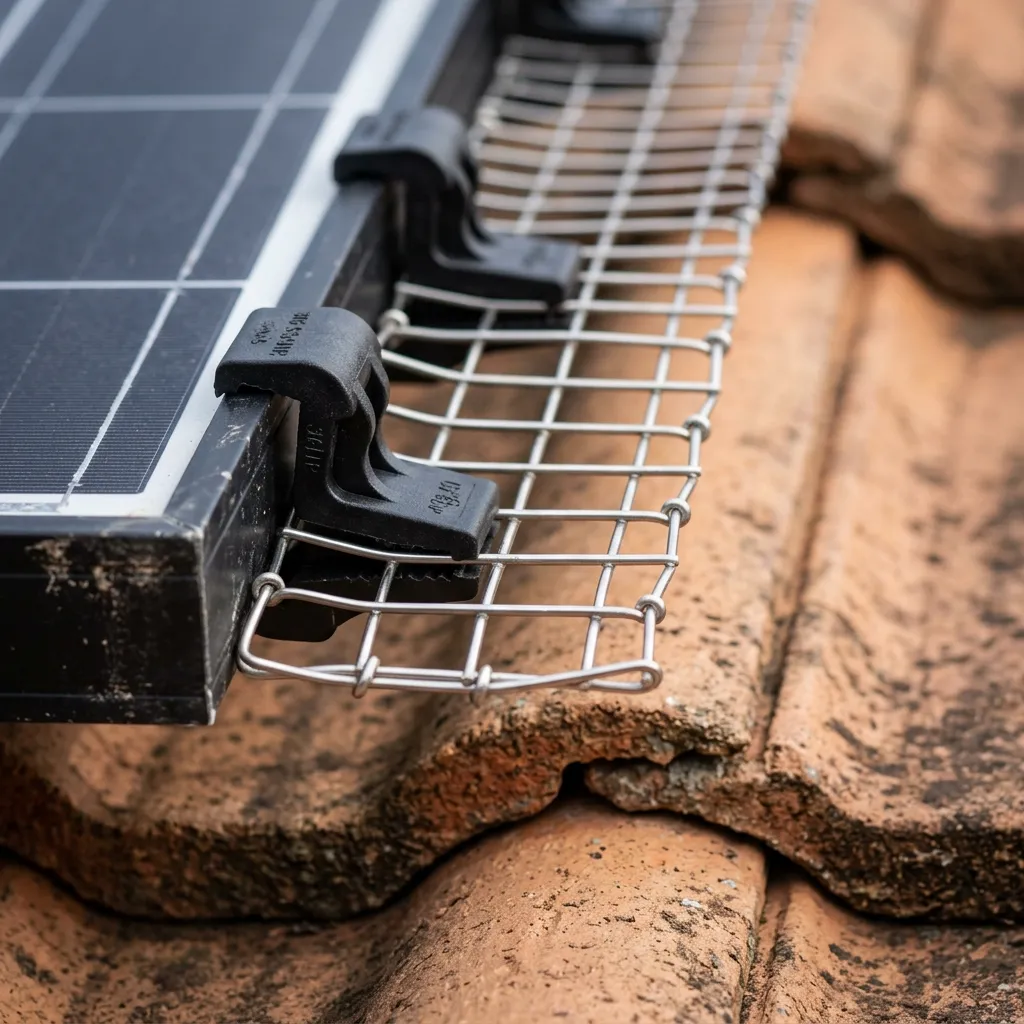
- Clipping mesh to panel frames is not electrical work. It does not require an electrician and does not require the system to be shut down.
- Removing, lifting or refitting panels does touch the electrical installation and belongs to a licensed electrician, ideally one with solar accreditation. If a quote includes lifting panels, ask who is doing that part and under what licence.
- Decline any quote that proposes drilling, screwing or gluing to panels or frames. It can compromise the panel or manufacturer warranty.
- If your building has an operations and maintenance contract on the solar system, tell that provider before third-party work happens on the array. A five-minute email can prevent a warranty argument later.
Why lot-by-lot proofing fails on a shared roof
A single owner on a strata roof, or a single tenancy in a multi-tenanted building, sometimes decides to proof their own array and let the rest of the roof look after itself. It rarely holds.
One array is sealed
The familiar nesting cavity disappears.
Birds move across the roof
The colony takes the next available cavity.
A second job is needed
Access, safety setup and travel are paid for again.
Birds excluded from one array on a roof they have already chosen do not leave the roof. They move to the next available cavity, which is the neighbour's array, and the colony stays on the building. Within a season the complaint volume is the same and there is now a second job to quote. The access setup, height safety equipment and travel are the fixed costs of a roof job, so doing the whole roof in one visit is usually cheaper per array than doing it twice.
For multi-building sites and portfolios, the same logic applies at the next scale up. Proof the buildings that have pressure now, in one program, rather than one call-out at a time.
What a building-level scope should contain
A quote for a house can be a paragraph. A quote for a building should not be. Ask for:
If any of that is missing, the number at the bottom is not comparable with anyone else's number.
Where these jobs actually go wrong
The approval was never minuted
The work happens, an owner objects afterwards, and the committee has nothing on record. Get the resolution or the agent's written instruction before booking.
The scope covered one array, the birds moved two metres
Scope the roof, not the first visible complaint.
Nest material was sealed in rather than removed
This creates an odour problem and, in warm humid weather, can drive bird mites into the building. Removal comes before sealing, in the same visit. See the active nest removal guide.
Nobody checked the species
All native birds are protected in New South Wales under the Biodiversity Conservation Act 2016, and a licence may be required to harm, kill or remove them. Feral pigeons, common mynas, common starlings and house sparrows are introduced. Welcome swallows and noisy miners are native and protected. Animal welfare law applies to every bird regardless of origin, so sealing live young into a cavity is never acceptable.
The quote assumed a clean roof
On a building that has had pigeons for years, the clean-up can be the larger half of the job. A quote produced without a roof inspection is a guess.
Frequently asked questions
Who approves bird proofing on a strata roof in NSW?
The owners corporation, normally acting through the strata committee or the managing agent, because the roof is usually common property even when the panels belong to one lot. Check your strata plan and by-laws, since schemes differ.
Is bird proofing common property maintenance or an alteration?
It depends on the scheme and on how the panels were approved. Maintenance and repair of common property sits under section 106 of the Strata Schemes Management Act 2015. Adding to or altering common property is handled under section 108 and may need a special resolution. Ask your managing agent to confirm which applies and have the answer minuted.
Do I need to shut down the solar system for bird proofing?
Not for mesh work. Clipping mesh around the array perimeter does not touch the electrical installation. If panels need to be lifted or removed for any reason, that part touches the electrical installation and belongs to a licensed electrician.
What documents should I ask a bird proofing contractor for?
A site-specific safe work method statement, a current certificate of currency for public liability, evidence of working at heights training for the attending technicians, workers compensation cover, and the relevant pest management licence. For strata, also ask for a written statement of what common property will be touched.
Can we just proof one owner's panels?
You can, and on a shared roof it usually does not hold. Birds excluded from one array move to the next one on the same roof. Building-wide is normally cheaper per array because roof access is the fixed cost.
Does hiring a contractor discharge our safety obligations?
No. Engaging a contractor adds a duty to consult, cooperate and coordinate with them. The primary duty on the business controlling the workplace remains.
Our warehouse roof has skylights and old sheeting. Does that change anything?
Yes, and it should be raised at quoting stage. SafeWork NSW's roof code directs that the roof be assessed, including inspection from below, before work starts. Fragile roof elements change the access method and the price.
Building-level quote
Get a scope written for your building
We quote strata and commercial rooftops to the committee, managing agent or facility manager, with the scope written per building rather than per panel, and the document pack supplied before the booking rather than on the day.
Sources
- Strata Schemes Management Act 2015 (NSW), sections 106 and 108
- Work Health and Safety Act 2011 (NSW) and Work Health and Safety Regulation 2017 (NSW), clauses 78 to 80
- SafeWork NSW, Work on roofs: commercial and industrial buildings code of practice
- Safe Work Australia, duties of a PCBU and Model Code of Practice: Managing the risk of falls at workplaces
- Clean Energy Council advice on AS/NZS 5033:2021, Installation and safety requirements for photovoltaic arrays
- NSW Environment and Heritage, people and wildlife policy, and the Biodiversity Conservation Act 2016 (NSW)
General information only, current as at 9 August 2026. It is not legal advice, and it does not replace advice on your own scheme, lease or safety management system.
Written and reviewed by the Super Pest Controler team
Published 9 August 2026. Last reviewed 9 August 2026. This guide is reviewed on a six-month cycle because strata law and WHS codes can change.
Related reading
Bird Proofing Solar Panels in Australia
Mesh, skirts, deterrents and residential pricing compared.
Sydney guideWhat Changes on a Sydney Roof
Coastal corrosion, roof types and local bird pressure.
Active nestsRemoving Birds Already Under Solar Panels
Species checks, nest removal, mite treatment and sealing order.
Commercial serviceCommercial Pest Management
Site-level inspections, documentation and ongoing protection.
ComplianceWhy Commercial Pest Control Matters
The audit and reputation cost of leaving a strata or business site unprotected.
New buildsConstruction Pest Control in Sydney
AS 3660 barriers, program timing and the handover documents certifiers ask for.
LegislationPossum Removal Laws in NSW
What committees can and cannot authorise when wildlife enters a building.
SydneyPest Control in Sydney
How treatment programs are structured across Greater Sydney.
WildlifeBowerbird Nesting in Sydney
A protected species that needs humane deterrence, not removal, on strata roofs.